Gua Sha for Acne-Prone Skin: How to Use It Gently
Gua sha doesn't treat acne, but used gently and with a clean tool, it can be a calming part of a routine for acne-prone skin. Work around breakouts rather than over them, keep the pressure light, and pair it with gentle skin care and support from your healthcare provider or dermatologist when you need it.
This article is for anyone with acne-prone skin who wants to use gua sha without irritating it. You'll learn what gua sha can and can't do for breakouts, how Traditional Chinese Medicine views acne, and a simple, gentle way to practise at home.
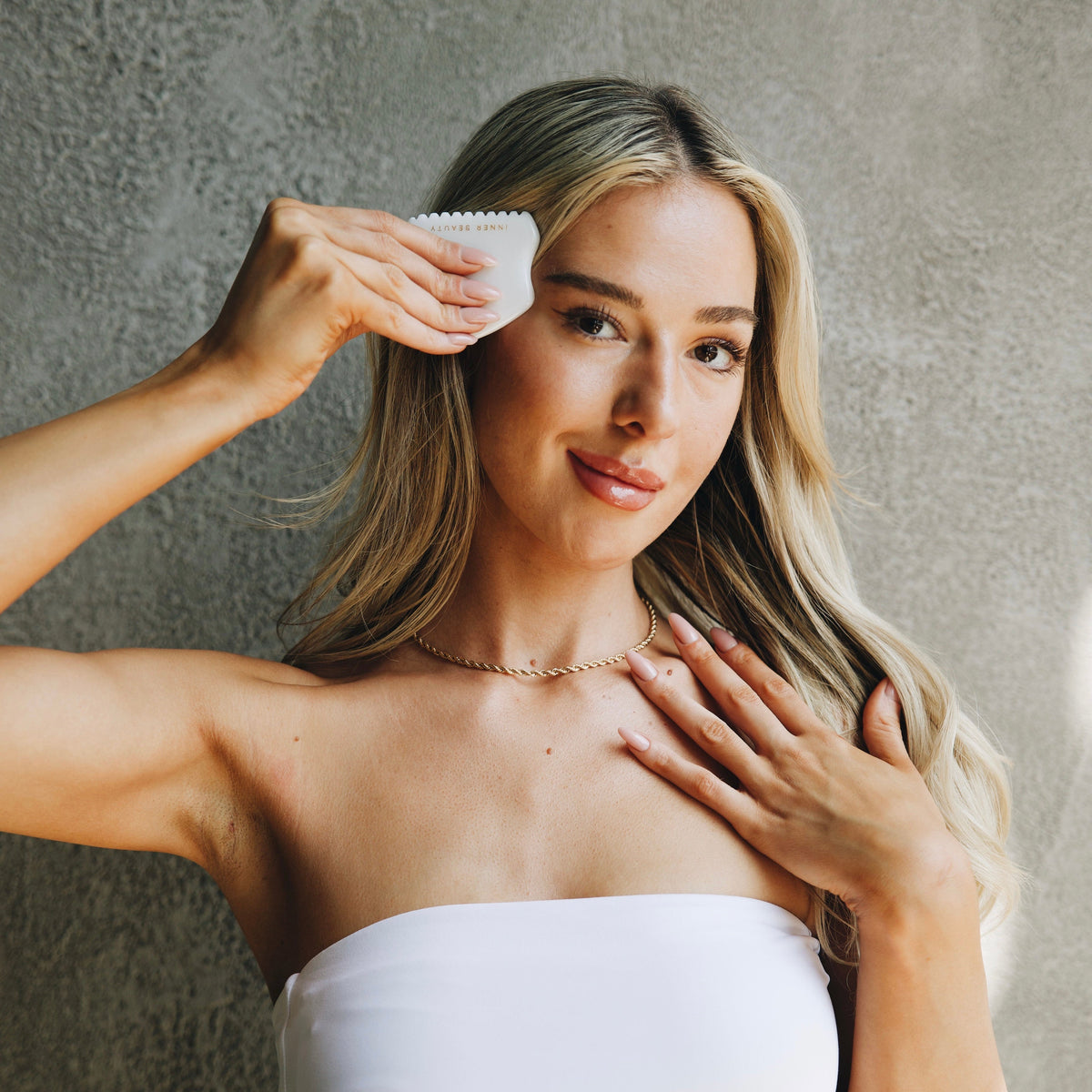
Can gua sha help acne?
Key takeaways
- Gua sha is not an acne treatment. It's a massage practice that may ease facial tension and support a calmer routine.
- Never glide over active, inflamed or open breakouts.
- A clean tool, clean skin and a light, non-comedogenic oil matter most.
- In TCM, breakouts are often linked with heat or damp patterns; this is traditional context, not a diagnosis.
- For persistent, painful or cystic acne, see your healthcare provider or a dermatologist.
Acne has several causes, including oil production, clogged pores, the skin's bacteria and inflammation, and hormones. Read more in The Skin Microbiome and Acne. Gua sha doesn't change those directly. What it can offer is a few slow minutes of facial massage that many people find relaxing, along with a moment to notice how your skin is doing.
Research on facial gua sha is still limited. A 2023 review in the Journal of Cosmetic Dermatology found the evidence isn't yet strong enough to support firm skin claims, so we describe it as a supportive self-care practice rather than a fix.
How does Traditional Chinese Medicine view acne?
In Traditional Chinese Medicine (TCM), breakouts are often linked with patterns of heat, damp or stagnation, and the area where they appear is thought to reflect what's happening inside. Gua sha was traditionally used to move qi and blood and release stagnation.
These are traditional teachings, offered as context rather than medical advice. If you're curious about which pattern sounds like you, see 9 TCM Body Types, where damp-heat describes oily skin and breakouts.
How do you use gua sha on acne-prone skin?
Go slowly, keep the pressure light, and stop if anything feels sore or looks irritated.
- Clean your tool with mild soap and water or a wipe of 70% isopropyl alcohol, then let it dry.
- Cleanse your face gently, and pat it dry.
- Apply a few drops of a light, non-comedogenic oil, such as N°1 Squalane Oil, so the tool glides without tugging.
- Start at the neck and collarbones, with slow downward strokes, to ease tension there first.
- Work around breakouts, not over them. Glide along the jaw, cheeks and forehead where skin is clear, and lift the tool over any red, raised or open spots. A hydrocolloid patch such as the COSRX Acne Pimple Master Patch can cover a spot while you work around it.
- Keep sessions short, 3 to 5 minutes, a few times a week. Clean your tool again afterwards.
Skip gua sha on skin that is broken, infected or very inflamed, and pause if you're using strong prescription treatments that make your skin sensitive. Ask your dermatologist if you're unsure.
Which acupressure points are used for the skin in TCM?
Two points are often used on the face in TCM. Press gently with a fingertip or the rounded edge of your tool for 30 to 60 seconds, breathing slowly.
- LI20 (Yingxiang, "Welcome Fragrance"): beside each nostril, traditionally used for congestion around the nose.
- ST2 (Sibai, "Four Whites"): on the cheek, below the centre of the eye, traditionally used for the cheeks and eyes.
As with all TCM points, this is traditional context. Avoid pressing on active breakouts. For a different way of working with areas of the face, see our Facial Reflexology Guide, which draws on the work of facial reflexologist Jackie Van Ruler.
Gua sha or lymphatic brush: which suits acne-prone skin?
Both can fit, for different reasons. Gua sha works with an oil on muscle and tension. The Lymphatic Brush uses no oil and a very light touch on the skin, which some people with oily or congested skin prefer. With either, work around breakouts rather than over them. See Gua Sha vs Lymphatic Drainage for how they differ.
Where to start

Four-Edge White Jade Gua Sha
A smooth stone with four edges, easy to lift and work around breakouts with a light touch. See the Gua Sha Guide.

N°1 Squalane Oil
One ingredient, light and fragrance-free, to give your tool slip without feeling heavy.

SIV Biome Balancing Serum
A light serum with Bacillus spores that works alongside your skin's microbiome. Apply it before your gua sha oil.
FAQ
Is gua sha good for acne-prone skin?
It can be part of a routine for acne-prone skin if you use light pressure, a clean tool and a non-comedogenic oil, and work around breakouts. It is not a treatment for acne.
Can I use gua sha over pimples?
No. Lift the tool over red, raised or open breakouts. Gliding over them can irritate the skin and spread bacteria.
Can gua sha cause breakouts?
A dirty tool or a heavy oil can contribute. Clean your tool before and after each use, and choose a light oil like squalane.
How often should I do gua sha if I have acne?
A few short sessions a week is plenty. Notice how your skin responds and ease off if it looks irritated.
What oil should I use for gua sha on acne-prone skin?
A light, non-comedogenic oil such as squalane is a common choice. Avoid thick or heavily fragranced oils if your skin is easily congested.
When should I see a professional about acne?
If your acne is painful, cystic, leaving marks or scars, or not improving, see your healthcare provider or a dermatologist.