Easy Beef and Vegetable Stir Fry: A Warm, Nourishing Dinner
This beef and vegetable stir fry is a warm, protein-rich dinner that comes together in about 25 minutes. Lightly cooked vegetables are softer and often easier to chew and digest than raw ones, and in Traditional Chinese Medicine, warm cooked food is considered gentler on the Stomach and Spleen. It serves 2 to 3 and needs only a few simple ingredients.
This recipe is for busy evenings when you want something nourishing without a long list of steps. You'll learn why a protein-rich, cooked meal can feel so satisfying, how to make the stir fry, and easy ways to change it up.
Why is a beef and vegetable stir fry a nourishing dinner?
Key takeaways
- Protein is found in muscle, bone, skin and hair, and a protein food belongs on a balanced plate.
- Cooking vegetables softens their texture and reduces some insoluble fibre, which can make them easier to chew and digest.
- In Traditional Chinese Medicine, warm cooked meals are considered gentler on digestion. This is traditional context, not proof.
- Choose an unprocessed cut, keep red meat to modest portions, and let vegetables fill half the plate.
- The recipe serves 2 to 3 and takes about 25 minutes from start to finish.
A good stir fry brings together the three things a satisfying dinner needs: a protein food, plenty of vegetables and warmth. It's quick, it uses one pan, and the sauce stays light, so the flavour comes from garlic, ginger and good ingredients.
Canada's food guide suggests making half your plate vegetables and fruits, one quarter protein foods and one quarter whole grain foods. This stir fry with brown rice or quinoa fits that plate nicely.
What are the benefits of a protein-rich meal?
Protein is part of nearly every tissue in the body, from muscle and bone to skin and hair, and it's made from building blocks called amino acids (Harvard T.H. Chan School of Public Health). Including a protein food at dinner helps round out the meal.
The same source notes that the whole "protein package" matters, meaning the fats, fibre and sodium that come with a protein food. That's why this recipe uses an unprocessed cut like sirloin, flank or striploin, a modest portion per person, and a light sauce. If you enjoy red meat, Harvard suggests keeping it to small amounts, so on other nights the same method works with chicken or chickpeas.
Are cooked vegetables easier to digest than raw?
For many people, yes. Heat adds moisture and softens texture, which makes vegetables easier to chew and physically digest, and cooking reduces some of the insoluble fibre that can feel harder to digest (University Hospitals).
Cooking changes nutrients in both directions. Cooked carrots are higher in beta-carotene than raw, while boiling lowers water-soluble vitamins like vitamin C. A quick stir fry, with no water to pour away, is a gentle middle ground. Enjoy raw vegetables too, if they suit you.
What does Traditional Chinese Medicine say about warm, cooked food?
In Traditional Chinese Medicine (TCM), digestion is linked with the Stomach and Spleen, and warm, cooked food is traditionally considered gentler on them than cold or raw food. Ginger is a familiar warming ingredient in this tradition.
This is traditional context, not scientific proof, but many people notice that a warm meal simply feels more settling, especially in a Canadian winter. Explore how TCM describes different constitutions in 9 TCM Body Types: Which One Are You?
How do you make a beef and vegetable stir fry?
Serves 2 to 3. Prep: about 10 minutes. Cook: 10 to 15 minutes.
Ingredients
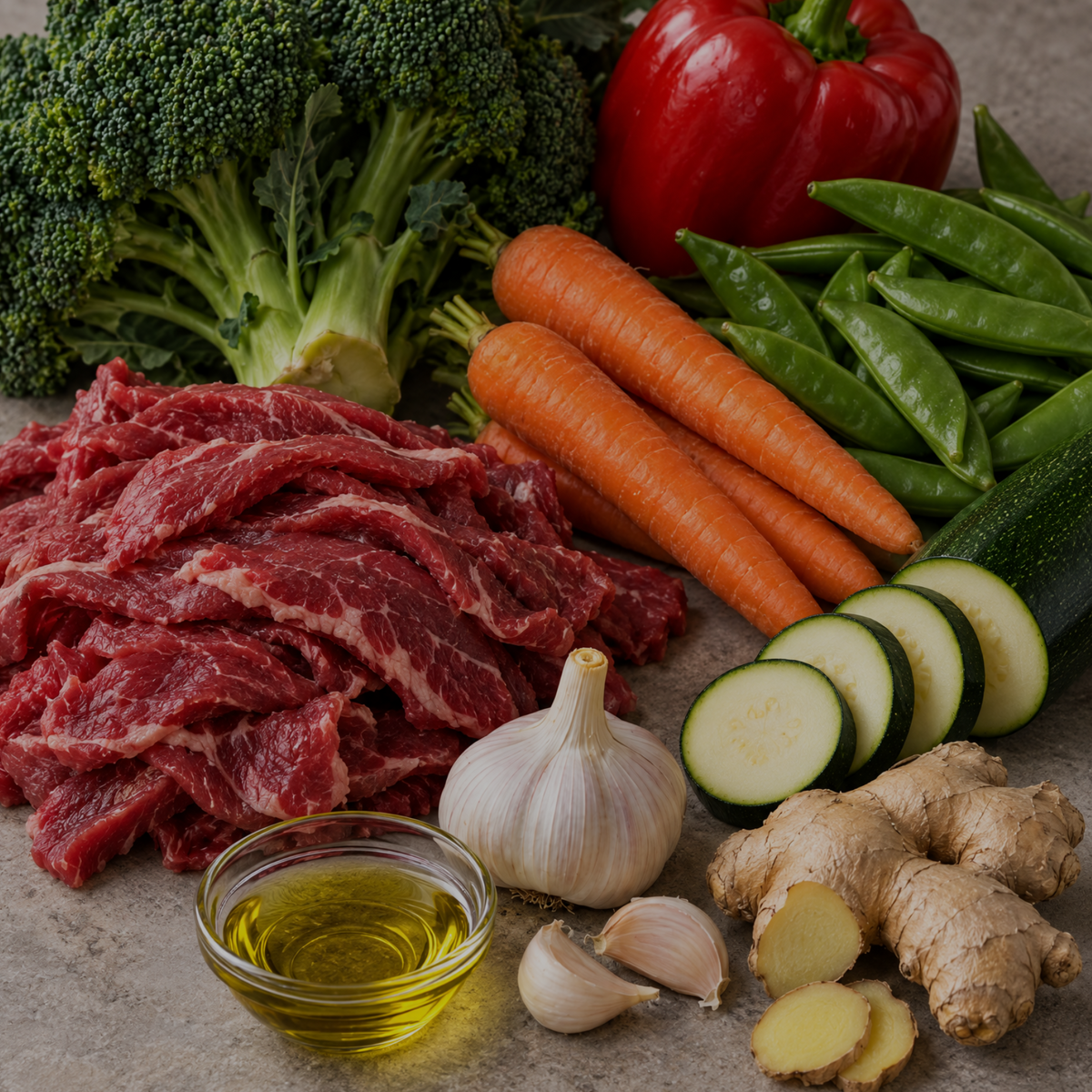
- 1 lb (about 450 g) sirloin, flank or striploin, thinly sliced against the grain
- 3 to 4 cups mixed vegetables, such as broccoli, red bell pepper, snap peas, carrots and zucchini
- 2 cloves garlic, minced
- 1 tbsp fresh ginger, grated
- 2 tbsp avocado oil or olive oil
- 1 to 2 tbsp coconut aminos or low-sodium soy sauce (optional)
- A squeeze of fresh lemon juice (optional)
- Mineral salt and freshly cracked black pepper, to taste
- To serve: sesame seeds, green onion or cilantro, and rice or quinoa if you like
Method
- Prepare everything first. Slice the beef thinly against the grain, cut the vegetables into similar bite-sized pieces, and mince the garlic and ginger. For crisper vegetables, soak them in cold water for a few minutes, then drain and pat dry.
- Heat the pan. Warm the oil in a large pan or wok over medium-high heat.
- Cook the beef. Add the beef in a single layer, season with salt and pepper, and cook for 3 to 4 minutes, turning once. For more tender beef, lower the heat slightly and don't crowd the pan.
- Add the aromatics. Stir in the garlic and ginger for about 30 seconds, until fragrant.
- Add the vegetables. Cook for 4 to 6 minutes, stirring often, until tender but still bright. Start with firmer vegetables like carrots and broccoli, then add the softer ones.
- Finish and serve. Add the coconut aminos or soy sauce and a squeeze of lemon, adjust the seasoning, and top with sesame seeds and green onion or cilantro.
Health Canada lists a safe internal temperature of 63°C (145°F) for medium-rare beef pieces and whole cuts, and 74°C (165°F) for chicken pieces. See Safe cooking temperatures.
How can you change up this stir fry?
The same method works with other proteins, so you can rotate through the week.
| Protein | How to prepare | Good to know |
|---|---|---|
| Beef | Slice thinly against the grain and cook 3 to 4 minutes | Choose an unprocessed cut and a modest portion |
| Chicken breast or thigh | Slice thinly and cook until no longer pink inside | Cook chicken pieces to 74°C (165°F) |
| Chickpeas | Rinse, pat dry and sauté until slightly crisp before adding vegetables | A plant-based protein that brings fibre too |
Serve it on its own for a lighter meal, or with rice or quinoa for something more filling. For more ideas on eating and caring for the body from the inside out, see the NOURISH Guide.
To round out the meal, some people like a glass of SuperBelly Peach Lychee about 30 minutes beforehand, as Blume suggests, or a warm, caffeine-free cup of Blume's Turmeric Blend afterwards.
Where to start

SuperBelly Peach Lychee by Blume
A zero-sugar drink mix with prebiotic fibre, the probiotic culture BC30 and electrolytes. Blume suggests a glass about 30 minutes before a meal, hot or cold. Explore the NOURISH collection.

Turmeric Blend by Blume
A warm, caffeine-free golden milk with turmeric, ginger, cinnamon, cardamom and black pepper and no added sugar, for a cozy cup after dinner. See the NOURISH Guide.

Triphala Plus by Sewanti
A classic Ayurvedic blend traditionally used to support digestion, taken at bedtime with warm water. Check with your healthcare provider before starting any supplement. See Sewanti.
FAQ
What is the best cut of beef for stir fry?
Sirloin, flank and striploin all work well. Slice them thinly against the grain and cook quickly over medium-high heat so they stay tender.
How long does a beef stir fry take?
About 25 minutes in total: around 10 minutes to prepare and 10 to 15 minutes to cook. It serves 2 to 3.
Are cooked vegetables easier to digest?
For many people, yes. Cooking softens vegetables and reduces some insoluble fibre, which can make them easier to chew and digest. If you have ongoing digestive symptoms, see your healthcare provider.
Why does TCM favour warm, cooked food?
In Traditional Chinese Medicine, warm, cooked food is traditionally considered gentler on the Stomach and Spleen, which are linked with digestion. It's traditional context rather than scientific proof.
Can I make this stir fry without beef?
Yes. Use thinly sliced chicken breast or thigh, cooked to 74°C (165°F), or rinsed chickpeas sautéed until slightly crisp. The rest of the method stays the same.
What can I use instead of soy sauce?
Coconut aminos are a common alternative with a slightly sweeter flavour. Low-sodium soy sauce also works, and a squeeze of lemon brightens either one.