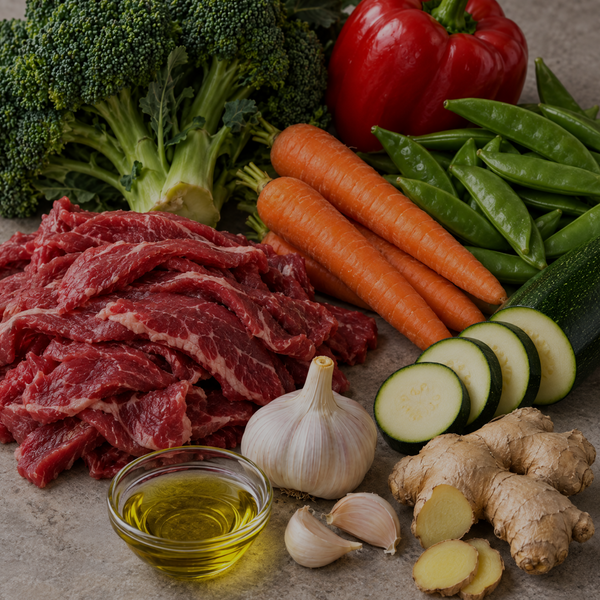
How to support gut health: 3 simple, everyday habits
Gut health is shaped most by everyday habits rather than any single product. Three simple places to start are eating more fibre, adding fermented foods, and eating a wider variety of plants, supported by water, movement and rest. Research on how the gut relates to the skin is still emerging, but caring for your gut is part of caring for your whole body.
This article is for anyone who wants a calm, practical way to support digestion without strict rules or trend diets. You'll learn three habits worth exploring and how to fit them into a normal week.
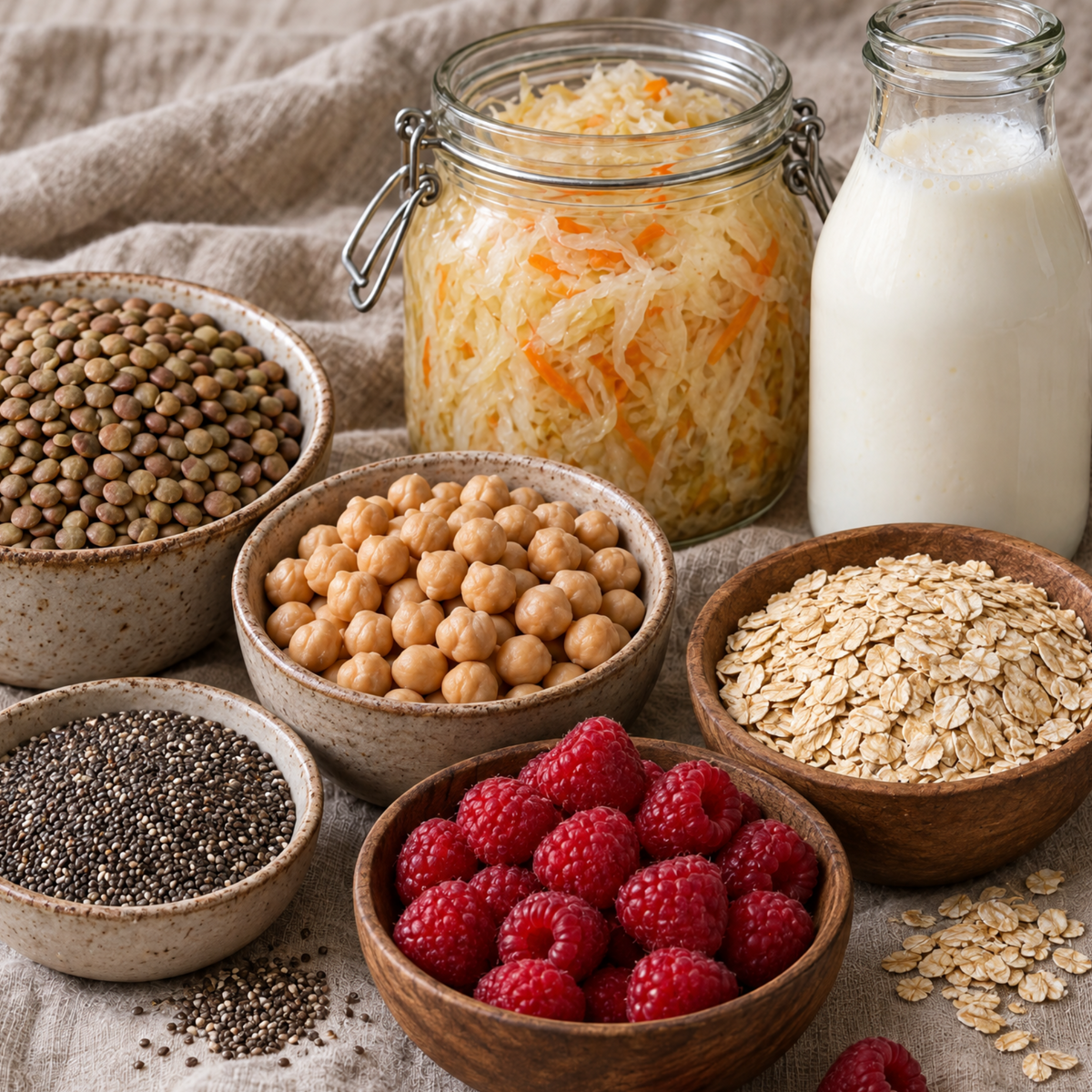
What does "gut health" actually mean?
Key takeaways
- Your gut is home to trillions of microbes, together called the gut microbiome.
- Fibre, fermented foods and a variety of plants are three of the simplest ways to support it.
- Health Canada suggests about 25 g of fibre a day for women and 38 g for men, and most Canadians get about half that.
- Water, movement and rest support digestion too.
- The gut and skin connection is a promising but still early area of research.
Gut health usually describes how comfortably your digestion works day to day and the balance of the microbes in your digestive tract, your gut microbiome. Many of these microbes help break down fibre your body can't digest on its own.
There's no single product that defines a "healthy gut." It helps to notice patterns: how you feel after meals and how your energy shifts with what you eat, drink and how you sleep.
How much fibre do you need, and why does it matter?
According to Health Canada, women need about 25 g of fibre a day and men about 38 g, yet most Canadians eat only about half that amount. Fibre is found in vegetables, fruits, whole grains, legumes, nuts and seeds.
Some types of fibre act as food for gut microbes. When your microbes ferment fibre, they produce compounds that help nourish the cells lining the gut. You don't need to count every gram. Small, steady swaps add up:
- Choose whole grain bread, brown rice or oats instead of refined versions.
- Add beans, lentils or chickpeas to soups, salads and bowls a few times a week.
- Keep a small handful of nuts or seeds for snacks.
- Add one more vegetable or fruit to a meal you already make.
Increase fibre gradually and drink water as you go. A sudden jump can leave you feeling bloated while your body adjusts.
Do fermented foods help gut health?
Fermented foods such as plain yogurt, kefir, sauerkraut, kimchi, miso and kombucha may support a more diverse gut microbiome. In a 2021 trial published in Cell, adults who ate more fermented foods saw their gut microbiome diversity steadily increase, along with lower levels of some inflammatory markers.
It was a small study of 36 people, so it's a starting point rather than a final answer. Try one small serving a day, such as sauerkraut with lunch or kefir with breakfast, choosing versions low in added sugar.
Why does eating a variety of plants matter?
Different microbes prefer different foods, so variety on your plate may support variety in your gut. The American Gut Project, one of the largest citizen science studies of the microbiome, found that people who ate more than 30 different plant types a week had more diverse gut microbiomes than those who ate 10 or fewer (UC San Diego, 2018).
Vegetables, fruits, whole grains, legumes, nuts, seeds, herbs and spices all count, so a seed blend or a handful of fresh herbs adds several at once.
How can you build these habits into a normal week?
| Habit | What it looks like | An easy first step |
|---|---|---|
| Fibre | Whole grains, legumes, vegetables, fruit, nuts and seeds | Swap one refined grain for a whole grain each day |
| Fermented foods | Plain yogurt, kefir, sauerkraut, kimchi, miso | Add one small serving to a meal you already eat |
| Plant variety | Many different plants across the week | Add one new vegetable, herb or seed to your shopping list |
| Water | Regular sips through the day | Keep a glass or bottle where you can see it |
| Rest and movement | Steady sleep, daily walks, slower meals | Take a short walk after one meal a day |
Water matters because fibre works best with enough fluid. Canada's Food Guide suggests making water your drink of choice. If plain water feels hard to keep up with, a lightly flavoured option like Blume SuperBelly Variety Pack adds zero-sugar flavour along with 1 g of prebiotic inulin fibre and a probiotic culture per serving, or choose a single flavour such as SuperBelly Peach Lychee. Read What are electrolytes, and when do you need them?
Rest matters too. Eating slowly and keeping a steady sleep routine are small ways to choose presence over performance; the RESET Breathwork Guide offers simple practices for slowing down.
Is there a connection between gut health and skin?
Researchers are exploring what's called the gut and skin axis: the idea that the gut microbiome may influence the skin through the immune system and the compounds gut microbes produce. A 2018 review in Frontiers in Microbiology describes possible links, while noting that the mechanisms are not yet fully understood and that much of the evidence comes from small studies.
Caring for your gut is part of caring for your whole body, skin included, but it isn't a replacement for skin care or medical advice. For the skin side, read The Skin Microbiome and Acne, and for a full inside and outside routine, the NOURISH Guide.
Where does Ayurvedic support like Triphala fit?
Triphala is a classic three-fruit blend from Ayurveda. Sewanti Triphala Plus is licensed by Health Canada as a traditional Ayurvedic formula and is traditionally used in Ayurvedic medicine in the treatment of indigestion and constipation. Traditional use is context: a complement to the habits above, not a replacement.
Read the label before use. It isn't for use during pregnancy or breastfeeding, and you should speak with a healthcare practitioner first if you take any medication. Explore more from Sewanti, a Canadian Ayurvedic brand based in Vancouver.
If you have ongoing digestive discomfort, pain or a change in your bowel habits that doesn't settle, see your healthcare provider.
Where to start

Sewanti Triphala Plus
A Health Canada licensed formula, traditionally used in Ayurvedic medicine in the treatment of indigestion and constipation. Taken at bedtime with warm water. Read all cautions before use.

Blume SuperBelly Variety Pack
Four zero-sugar flavours with prebiotic inulin fibre, the probiotic culture BC30 and electrolytes, an easy way to make water more inviting. By Blume, a Canadian, women-owned brand.

Blume Turmeric Blend
A warm, caffeine-free golden milk with turmeric, ginger, cinnamon, cardamom and black pepper and no added sugar. A cozy after-dinner cup.
FAQ
What is the easiest way to support gut health?
Start with fibre. Health Canada suggests about 25 g a day for women and 38 g for men; add whole grains, legumes, vegetables and fruit gradually, with water.
Are fermented foods good for your gut?
They may be. A small 2021 trial found that eating more fermented foods increased gut microbiome diversity. Try one small serving a day.
Why does eating many different plants matter?
Different gut microbes prefer different foods. The American Gut Project found that people who ate more than 30 plant types a week had more diverse gut microbiomes than those who ate 10 or fewer.
Does gut health affect your skin?
Research on the gut and skin connection is promising but still emerging. Caring for your gut supports your whole body, but it isn't a replacement for skin care or medical advice.
What is Triphala traditionally used for?
Sewanti Triphala Plus is traditionally used in Ayurvedic medicine in the treatment of indigestion and constipation, as stated on its Health Canada licence. Read all label cautions first.
When should I see a healthcare provider about my digestion?
If you have ongoing discomfort, pain or a change in bowel habits that doesn't settle with simple changes, see your healthcare provider.