What foods support healthy circulation? 6 to add to your plate
Foods that may support healthy circulation include nitrate-rich vegetables like beets and leafy greens, colourful fruits like citrus, berries and pomegranate, and fatty fish rich in omega-3s, with garlic, ginger, turmeric and cayenne adding warmth and flavour. No single food does the work on its own. A varied plate, regular movement and warmth work together to keep the body's fluids moving.
This article is for anyone who wants to eat in a way that supports circulation, without miracle foods or big promises. You'll learn which foods researchers look at most, why, and how food fits alongside movement and lymphatic care in the FLOW Pathway.
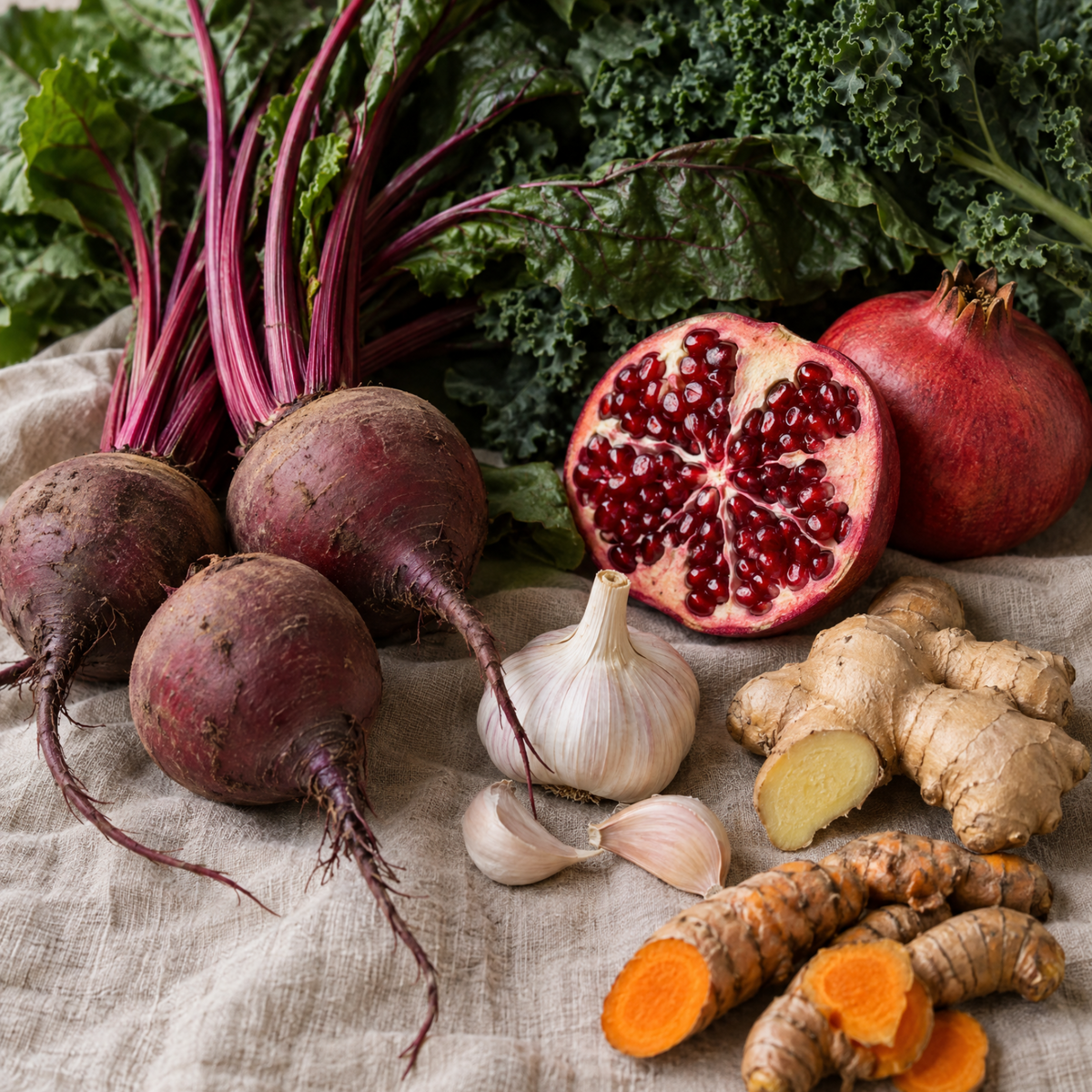
How does food affect circulation?
Key takeaways
- Beets and leafy greens are rich in dietary nitrate, which the body can convert to nitric oxide, a molecule that helps blood vessels relax.
- Fatty fish such as salmon, sardines and mackerel provide omega-3s, which are part of healthy cell membranes and support the heart and blood vessels.
- Colourful fruits and vegetables should fill about half your plate, as Canada's food guide recommends.
- Spices like garlic, ginger, turmeric and cayenne are best enjoyed as flavour; supplements are a separate conversation with your healthcare provider.
- Movement matters as much as food: muscles help move both blood and lymph.
Your circulation carries oxygen and nutrients through your blood vessels, and the health of those vessels is shaped by everyday habits, including what you eat. Canada's food guide offers a simple frame: fill half your plate with vegetables and fruits, a quarter with whole grains and a quarter with protein foods, choosing plant-based proteins more often.
Within that pattern, a few foods come up again and again in circulation research. Think of them as easy additions.
Which foods support healthy circulation?
| Food | What it offers | Easy ways to add it |
|---|---|---|
| Beets | Dietary nitrate | Roasted, grated raw into salads, or in soups |
| Leafy greens (spinach, arugula, lettuce) | Dietary nitrate, folate, fibre | A handful in eggs, bowls, smoothies or wraps |
| Citrus, berries, pomegranate | Vitamin C and colourful plant compounds | On oatmeal or yogurt, or as an afternoon snack |
| Salmon, sardines, mackerel | Omega-3s (EPA and DHA) | One to two servings of seafood a week |
| Garlic | Flavour and natural sulphur compounds | Crushed into dressings, sauces and stir-fries |
| Ginger, turmeric, cayenne | Warming flavour | In teas, golden milk, soups and marinades |
Are beets and leafy greens good for blood flow?
They are among the best-studied foods for blood vessel health. A 2013 review in the British Journal of Clinical Pharmacology, Vascular effects of dietary nitrate, describes how nitrate from green leafy vegetables and beetroot can be converted in the body to nitric oxide, which helps blood vessels relax. The authors found it may support healthy blood vessel lining function, while noting that long-term studies are still limited.
In practice, keep greens and beets on rotation: a handful of arugula with lunch or roasted beets with dinner both count.
Why does fatty fish come up so often?
Fatty fish is the main food source of the omega-3s EPA and DHA. According to the NIH Office of Dietary Supplements, omega-3s are part of the membranes of every cell and support the work of the heart and blood vessels. Its omega-3 fact sheet notes that eating seafood as part of a healthy diet is linked with heart health, and cites the American Heart Association's suggestion of one to two seafood servings a week.
If you don't eat fish, walnuts, flaxseed and chia provide ALA, a plant omega-3, though the body converts only small amounts of it to EPA and DHA. Talk to your healthcare provider before starting an omega-3 supplement, especially if you take a blood thinner.
What about garlic, ginger, turmeric and cayenne?
These warming ingredients have long histories in traditional cooking and in practices such as Traditional Chinese Medicine and Ayurveda. That history is part of their appeal, but it's context, not proof. The research on their effects mostly uses concentrated supplements rather than the amounts you'd cook with.
Enjoy them for flavour and warmth. A Blume Turmeric Blend golden milk brings turmeric, ginger, cinnamon, cardamom and black pepper together in one caffeine-free cup, and a Matcha Coconut Blend latte adds leafy green moringa to your morning (it contains caffeine, so keep it earlier in the day).
The U.S. National Center for Complementary and Integrative Health notes that garlic supplements may increase the risk of bleeding. If you take blood thinners or other medication, or are preparing for surgery, check with your healthcare provider before taking garlic, ginger or turmeric supplements.
What else supports circulation and lymph flow?
Food is one part of FLOW. The other is movement. Your heart pumps blood, but lymph has no pump of its own; as Cleveland Clinic explains, it is pushed along as the muscles around the lymph vessels squeeze. The Canadian 24-Hour Movement Guidelines suggest at least 150 minutes of moderate to vigorous activity a week, several hours of light movement a day, and breaking up long periods of sitting.
A simple FLOW day might look like this:
- Start warm. A glass of warm water or a caffeine-free golden milk is a gentle way to begin.
- Brush first. On clean, dry skin, follow the BIG 6® sequence by Dr. Perry Nickelston with The Lymphatic Brush Large, designed by Cecily Braden. Light, slow strokes toward the collarbones may help legs and arms feel lighter.
- Massage with oil. After the shower, warm a few drops of N°8 Flow Oil between your palms and massage upward along your legs and arms. The oil gives your hands a smooth glide; the movement does the work.
- Move every hour. Stand, stretch or walk for a few minutes, especially on long desk days.
- Fill half your plate with colour at lunch and dinner, with greens or beets on most days.
For the full technique, read The Lymphatic Brush Guide, or see how it compares with gua sha in Gua sha vs lymphatic drainage.
Cold hands and feet can simply mean you've been still or chilly for a while. If you notice new or one-sided swelling, leg pain, numbness, skin colour changes or wounds that are slow to heal, see your healthcare provider.
Where to start

The Lymphatic Brush Large
The original patented lymphatic brush by Cecily Braden. Many people use the Large for larger areas: the body, the BIG 6®, the neck and broader areas of the face. See The Lymphatic Brush Guide.

N°8 Flow Oil
Our eight-oil blend with green tea, milk thistle and ginseng, made for massage with your hands or a gua sha, so the movement can support blood and lymph flow.

Blume Turmeric Blend
A caffeine-free golden milk of five organic spices, an easy way to bring warming flavour into your day. Explore more in NOURISH.
FAQ
What is the best food for circulation?
There isn't one. Beets and leafy greens (for dietary nitrate) and fatty fish (for omega-3s) are among the best studied, but a varied plate that is half vegetables and fruits matters more than any single food.
Do beets improve blood flow?
Beets are rich in dietary nitrate, which the body can convert to nitric oxide, a molecule that helps blood vessels relax. Research is promising, though long-term studies are limited. Enjoy them as part of a varied diet.
Does turmeric help circulation?
Turmeric has a long traditional history, but most research uses concentrated supplements. In food and drinks, enjoy it for flavour and warmth, and talk to your healthcare provider before taking turmeric supplements.
Can movement help circulation more than food?
They work together. Muscles help move blood back toward the heart and push lymph along its vessels, so regular movement and breaking up long periods of sitting are just as important as what's on your plate.
When should I see a doctor about poor circulation?
See your healthcare provider if you notice new or one-sided swelling, leg pain, numbness, skin colour changes or slow-healing wounds.