What is the lymphatic system? A deep dive into how it works
The lymphatic system is the body's drainage and defence network: vessels, nodes and organs that collect extra fluid from your tissues, filter it and return it to the bloodstream at the base of the neck. It has no heart to pump it, so it relies on valves, the vessels' own gentle contractions and the movement of the muscles around them. Understanding how it flows is the foundation of every lymphatic drainage practice.
Lymphatic drainage is everywhere right now, from spa menus to at-home brushes. Is it just a trend? Your anatomy says no. This deep dive walks through how the lymphatic system works, where lymph drains, why movement matters so much and how simple practices like the BIG 6® may support your natural flow. It's the background behind our Lymphatic Brush Guide.
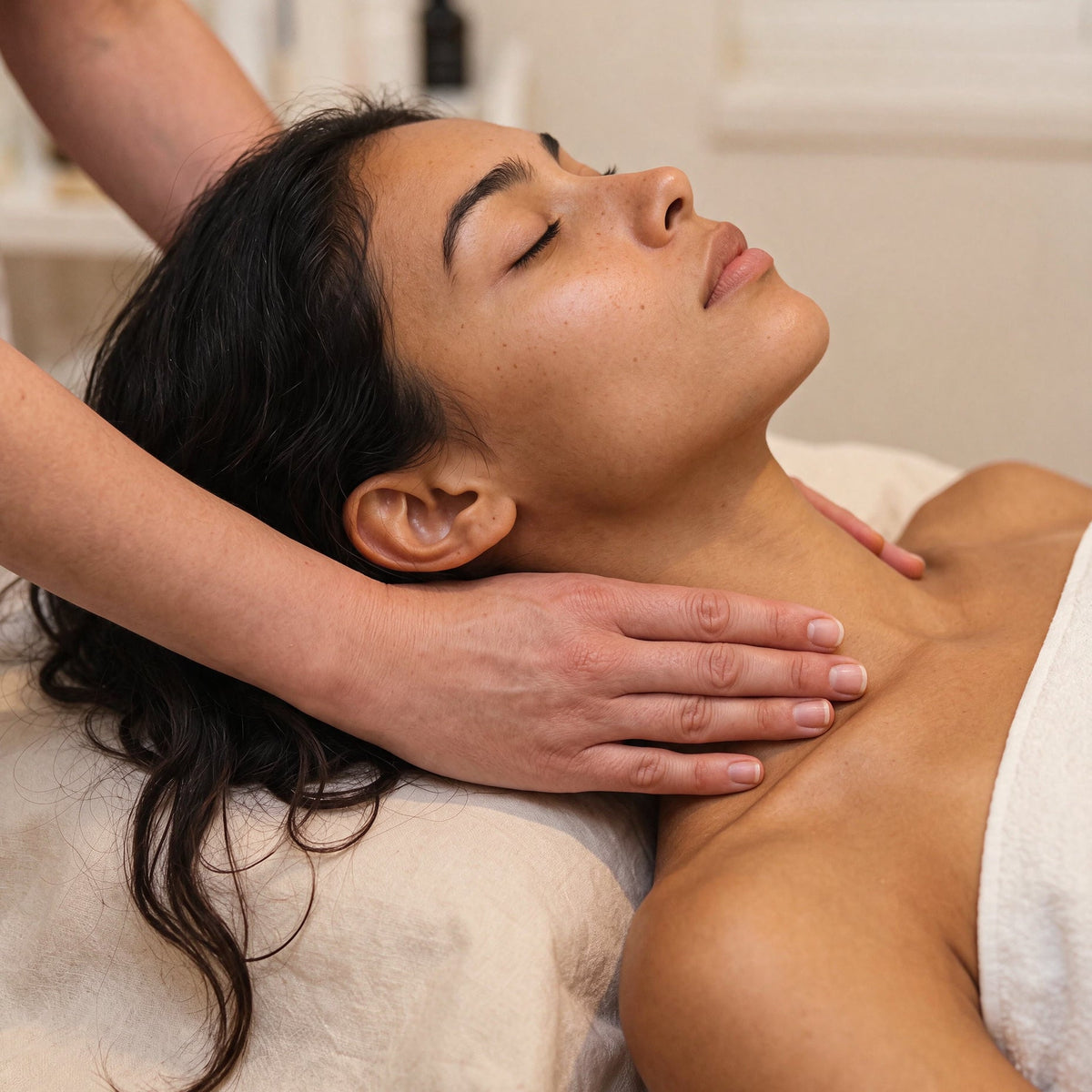
What is the lymphatic system?
3 L
of fluid returned to your blood every day
2
ducts drain all of your lymph
1 way
lymph flows toward your collarbones
Key takeaways
- The lymphatic system is a network of vessels, nodes and organs that works alongside your blood circulation and immune system.
- It returns about 3 litres of fluid a day from your tissues to your bloodstream.
- All lymph drains through two ducts into veins at the base of the neck, just above the collarbones.
- There's no central pump. Valves, the vessels' own contractions and nearby muscle movement keep lymph moving.
- That's why lymphatic routines start at the collarbones and use a very light touch.
In a sentence: the lymphatic system collects the fluid that leaks out of your blood vessels into your tissues, filters it through the lymph nodes and returns it to your blood, while housing many of the immune cells that help protect you from infection. It's part of both your circulatory system and your immune system.
How does the lymphatic system work with your blood circulation?
Did you know?
Lymph starts out as the fluid that bathes your cells. The moment it slips into a lymphatic vessel, it gets a new name: lymph.
A quick refresher first. Your heart pumps blood through arteries, which carry it away from the heart, and veins, which bring it back. An easy way to remember it: arteries away, veins back. In between, tiny capillaries deliver oxygen and nutrients to your cells.
Some fluid always leaks out of those capillaries into the spaces between your cells. According to Cleveland Clinic, about 20 litres of plasma leave the capillaries each day. About 17 litres flow straight back in, and the remaining 3 litres or so are collected by the lymphatic system. Without it, that fluid would build up in the tissues as swelling, known as edema.

Lymphatic vessels and nodes run through the whole body, and all of the lymph flows back toward the collarbones.
What are the main parts of the lymphatic system?
Did you know?
Your tonsils, your spleen and even your bone marrow are all part of your lymphatic system.
- Lymph. The clear fluid inside the system. It carries water, proteins, immune cells and cellular waste. Lymph from the gut also carries fats and fat-soluble vitamins absorbed from your food.
- Lymphatic vessels. A network that starts as tiny, delicate capillaries just under the skin and joins into larger collecting vessels with one-way valves.
- Lymph nodes. Small, bean-shaped filters along the vessels, clustered in areas like the neck, underarms, abdomen and groin. They store lymphocytes and other immune cells that find and destroy harmful substances.
- Lymphatic organs. Bone marrow, where lymphocytes develop; the thymus, where T cells mature; the spleen, which filters the blood; and the tonsils, adenoids and lymphatic tissue that line the gut and airways.
- Collecting ducts. Two large ducts that return lymph to the bloodstream, covered below.
What does the lymphatic system do?
Did you know?
Swollen glands during a cold are your lymph nodes at work. Immune cells gather there to respond to the illness.
- Keeps fluid in balance. It collects extra fluid from the tissues and returns it to the blood.
- Supports immune function. As lymph passes through the nodes, immune cells check it for anything harmful.
- Absorbs fats. Lymphatic vessels in the small intestine take up fats and fat-soluble vitamins from digestion.
Cleveland Clinic explains that lymph nodes swell when immune cells gather there to respond to an illness, a normal immune response, and upper respiratory infections are the most common cause. A node that stays swollen, feels hard or comes with other symptoms is worth checking with your doctor.
Where does lymph drain?
Did you know?
All of the lymph in your body drains just above your collarbones. And it doesn't drain evenly: your legs, abdomen and entire left side flow to the left, while the right side only drains the right arm and the right side of your head, neck and chest.
All the lymph in your body returns to the blood through just two ducts, which empty into veins at the base of the neck, just above the collarbones.

Purple: drained by the right lymphatic duct. Yellow: drained by the thoracic duct. Image: OpenStax College, CC BY 3.0, via Wikimedia Commons.
Right lymphatic duct
- The right arm
- The right side of the head and face
- The right side of the neck
- The right side of the chest and breast
- Empties into the veins at the base of the neck, right side
Thoracic duct
- Both legs
- The abdomen
- The left arm
- The left side of the head, face, neck and chest
- Empties into the veins at the base of the neck, left side
The thoracic duct is the body's largest lymphatic vessel, about 38 to 45 centimetres long. It runs up from the abdomen through the chest to the left side of the neck. This is why lymphatic routines, including Cecily Braden's and Dr. Perry Nickelston's, begin at the collarbones. Think of it like a sink: when the drain is clear, water flows out easily, and when it's blocked, everything backs up. Clearing the area where lymph returns first makes room for fluid from everywhere else to follow.
How does lymph move without a heart?
Did you know?
Lymph has no heart to pump it. Your lymphatic vessels squeeze on their own, and every step you take helps them along.
So how does it move? It relies on a team effort:
- One-way valves inside the vessels keep lymph moving in the right direction.
- The vessels' own smooth muscle squeezes rhythmically to push lymph along.
- The muscles around them squeeze the vessels as you move, and the pulse of nearby arteries helps too.
Lymphatic educators, including Dr. Perry Nickelston, also teach that deep breathing and pressure changes in the chest help draw fluid toward the collarbones, where pressure is lowest. This is one reason slow, deep breathing is part of many lymphatic routines.
Movement is the piece modern life often takes away. Many of us sit for most of the day, which means less of the muscle activity that helps lymph along. Some people notice this as puffiness or heaviness, especially in the legs by the end of the day.
What is the BIG 6®?
Did you know?
The BIG 6® starts at the collarbones for a reason: it's where all of your lymph returns to the blood.
The BIG 6® is a self-care routine created by Dr. Perry Nickelston of Stop Chasing Pain. It works on six key areas for lymphatic and blood flow, where lymph node clusters, major vessels and joints come together. Gentle massage, tapping or light skin stretching is used at each area, in this order:
- Collarbones, just above and below
- Side of the neck, just below the ears
- Underarms and chest
- Abdomen
- Groin crease
- Behind the knees
Working in order from 1 to 6 starts at the collarbones, where lymph returns to the blood, and moves outward. Cecily Braden uses the same principle with The Lymphatic Brush: connect, stretch the skin lightly and sweep toward the nearest lymph nodes, starting at the collarbones.
How can you support your lymphatic flow at home?
Did you know?
The lymphatic vessels closest to your skin are so delicate that a feather-light touch reaches them better than deep pressure.
- Move often. Walk, stretch and break up long periods of sitting. Every muscle contraction helps.
- Breathe slowly. A few minutes of slow belly breathing is a simple place to begin. Our RESET Breathwork Guide has easy practices.
- Start at the collarbones. Whether you use your hands or a brush, clear the collarbones and neck first, then work outward.
- Keep the touch light. Use a slow, rhythmic touch that gently moves the skin rather than pressing into the muscle.
- Be consistent. A few minutes most days matters more than a long, occasional session. See The Lymphatic Brush Guide for step-by-step routines, and Dry brushing vs lymphatic brushing for how the two differ.
Skip lymphatic drainage with active cancer (unless cleared by your medical team), deep vein thrombosis, congestive heart failure, kidney disease, an acute infection or fever, or in the first trimester of pregnancy. If you've had lymph nodes removed or have ongoing swelling, check with your healthcare provider or a certified lymphedema therapist first.
Where to start

The Lymphatic Brush Large & Small Set
Cecily Braden's patented brushes in both sizes, so you can match the brush to the area you're working on, from the BIG 6® to around the eyes. See The Lymphatic Brush Guide.

The Lymphatic Flow Set
The Lymphatic Brush® Large and Small with the Osmosis Boost Peptide Activating Mist, a complete brushing practice for face and body, ready to give.

N°8 Flow Oil
Our FLOW face and body oil with green tea, milk thistle and ginseng, to apply after brushing or for a gentle self-massage.
FAQ
Is lymphatic drainage just a trend?
The interest is new, but the anatomy isn't. The lymphatic system returns about 3 litres of fluid to your blood every day and plays a central role in immune function. Lymphatic drainage practices are simply ways to support a system that's always working.
Where does lymph go?
Lymph travels through the vessels and nodes, then returns to the bloodstream through two ducts that empty into veins at the base of the neck, just above the collarbones. The thoracic duct drains most of the body, and the right lymphatic duct drains the right arm and the right side of the head, neck and chest.
Does the lymphatic system have a pump?
Not a central one like the heart. Lymph moves with the help of one-way valves, rhythmic contractions of the vessels themselves, and the squeeze of surrounding muscles as you move.
Why do lymph nodes swell?
Lymph nodes swell when immune cells gather there to respond to an illness, which is a normal immune response. Colds and other upper respiratory infections are the most common cause. See your doctor if a node stays swollen, feels hard or comes with other symptoms.
What is the BIG 6®?
The BIG 6® is a self-care routine created by Dr. Perry Nickelston of Stop Chasing Pain. It works on six areas in order: the collarbones, the side of the neck, the underarms and chest, the abdomen, the groin crease and behind the knees.
Does lymphatic drainage detox the body?
The lymphatic system carries cellular waste away from the tissues and back to the blood, where organs like the liver and kidneys process it. Lymphatic drainage may support that natural flow, but it doesn't "flush toxins" on its own.