Mouth breathing vs nasal breathing: why does it matter?
Breathing through your nose filters, warms and humidifies the air you take in, and carries nitric oxide made in the sinuses down toward the lungs. Mouth breathing skips that conditioning and is often linked with a dry mouth, snoring and less restful sleep. It's usually a sign that air isn't moving easily through the nose, so the first step is to notice it, practise gentle nasal breathing and check in with a healthcare provider if it persists.
This article is for anyone who wakes up with a dry mouth or catches themselves breathing through the mouth. You'll learn what the nose does, the common signs of mouth breathing, what research says about the face, and gentle ways to practise.
What does nasal breathing do?
Key takeaways
- The nose filters, warms and humidifies air before it reaches the lungs.
- Breathing in through the nose draws nitric oxide from the sinuses toward the lungs.
- Mouth breathing is commonly linked with dry mouth, bad breath, snoring and feeling tired.
- Research on breathing and facial development is mainly in children. Adults with persistent mouth breathing should see a doctor or dentist.
- Evidence that mouth tape improves sleep is limited, and it isn't for everyone.
Your nose is built to prepare air for your lungs. Inside, the turbinates and the moist lining of the nasal passages filter out particles and add warmth and moisture as you breathe in. Cleveland Clinic describes the turbinates as the structures that moisten and clean the air flowing through the nose.
The sinuses also produce nitric oxide, a gas the body uses as a signalling molecule. Karolinska Institutet researcher Eddie Weitzberg explains that when you inhale through the nose, nitric oxide is drawn out of the sinuses and travels down to the lungs. Nasal breathing also tends to slow and deepen the breath.
Mouth breathing vs nasal breathing: what's the difference?
| Nasal breathing | Mouth breathing | |
|---|---|---|
| Air conditioning | Filtered, warmed and humidified by the nose | Reaches the throat and lungs drier and cooler |
| Nitric oxide | Carried from the sinuses toward the lungs | Largely bypassed |
| Pace | Tends to be slower and deeper | Often faster and higher in the chest |
| How the mouth feels | Moist and comfortable | Often dry, especially on waking |
| At night | Quieter breathing | Commonly linked with snoring and drooling |
What are the signs you mouth-breathe?
Cleveland Clinic lists these common signs in adults:
- A dry mouth, particularly when you wake up
- Bad breath
- Drool on your pillow
- Snoring
- Hoarseness
- Feeling tired even after a full night in bed
In most cases, mouth breathing happens because air can't pass easily through the nose. Common reasons include congestion from allergies, colds or sinusitis, a deviated septum, enlarged turbinates, nasal polyps, or enlarged tonsils and adenoids. Sleep apnea is another. Mouth breathing is often a signal worth understanding, not a habit to force your way out of.
Can mouth breathing change the shape of your face?
Most of the research on breathing and facial development is in children, whose faces and jaws are still growing. Cleveland Clinic notes that in children, long-term mouth breathing has been associated with a narrower face, a receding chin or jaw and teeth that don't line up, often because of an underlying airway blockage. If your child often breathes through the mouth or snores, ask their doctor or dentist to check the nose and airway.
For adults, there's no good evidence that changing how you breathe will reshape your face, and no practice or product can promise that.
If you snore loudly, wake up gasping or choking, or feel tired after a full night's sleep, talk to your doctor. These can be signs of sleep apnea, which needs proper assessment. A doctor or dentist can also look for the cause of persistent mouth breathing.
How can you practise nasal breathing?
Start during the day, when you can notice how it feels.
- Notice. A few times a day, check in: are your lips together? Is your breath moving through your nose or your mouth?
- Rest your mouth. Close your lips gently, let your tongue rest on the roof of your mouth and relax your jaw. Our Facial Reflexology Guide has simple ways to soften jaw tension.
- Breathe low and slow. Breathe in through your nose for about 4 seconds and out through your nose for 4 to 6 seconds, letting the belly and lower ribs move.
- Try a hum. Breathe in through your nose, then hum gently on the exhale.
- Keep it easy. Two to five minutes is plenty. If your nose feels blocked or you feel light-headed, return to normal breathing.
For counts, timings and seven free techniques, see the RESET Breathwork Guide. A familiar cue, like lighting the Mala Fireside Candle, can help mark the pause.
Should you try mouth tape?
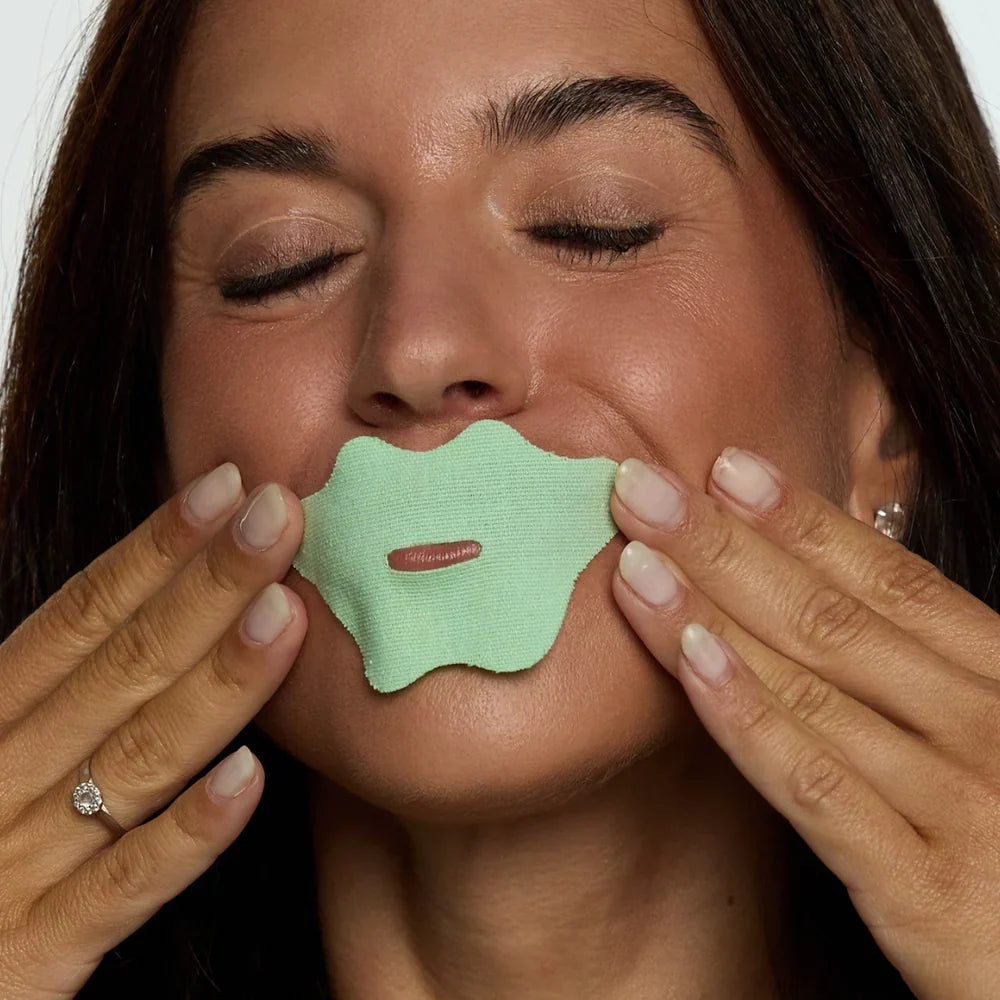
Mouth tape is a small, soft strip that rests over the lips to gently encourage breathing through the nose. The evidence for sleep is limited: a 2025 systematic review in PLOS ONE, led by researchers at Western University in Ontario, looked at 10 studies and found little reliable evidence that mouth taping improves sleep, and noted possible risks for people who can't breathe easily through the nose.
Don't use mouth tape if you have:
- A blocked or stuffy nose, a cold, allergies or sinus congestion
- Known or suspected sleep apnea, or heavy snoring
- Asthma, COPD or another breathing condition
- Had alcohol or sedating medication, or if you feel nauseous
Never use it on children. If you'd like to try it, check that you can breathe comfortably through your nose with your mouth closed for a few minutes, start with 10 to 20 minutes during the day, and only try it at night once daytime use feels completely easy. Remove it right away if you feel any discomfort. The full safety notes are in the Breathwork Guide.
Where to start

Restore & Refresh Mouth Tape by Mintier
Soft, breathable tape that gently keeps the lips closed to encourage breathing through your nose. For healthy adults who breathe easily through the nose. Read the safety notes in the Breathwork Guide first.

Stainless Steel Tongue Cleaner by Mintier
A curved stainless steel scraper that gently lifts buildup from the tongue after brushing, so your mouth feels cleaner and fresher. Explore all of Mintier.

Breathe Essential Oil Roller by Fern & Petal
A fresh, minty roll-on of eucalyptus, peppermint, rosemary, lavender and lemon. A calming scent cue for a few minutes of slow nasal breathing.
FAQ
Is it better to breathe through your nose or your mouth?
For everyday breathing at rest, the nose is designed for the job. It filters, warms and humidifies the air and tends to slow the breath. Mouth breathing still helps when you need it, such as during hard exercise.
Why do I wake up with a dry mouth?
A dry mouth on waking is one of the most common signs of breathing through the mouth at night, often because the nose is congested. If it happens most mornings, mention it to your doctor or dentist.
Can nasal breathing change my face as an adult?
There's no good evidence that it can. Research on breathing and facial development is mainly in children, whose faces are still growing. If you're concerned about your jaw, bite or airway, see your dentist or doctor.
Is mouth taping safe?
Evidence is limited, and it isn't for everyone. Don't use mouth tape if you have a blocked nose, sleep apnea, heavy snoring or a breathing condition, and never use it on children. If you want to try it, start with short daytime sessions.
When should I see a doctor about mouth breathing?
If you can't breathe comfortably through your nose, snore loudly, wake up gasping or feel tired after a full night's sleep, see your healthcare provider. These can point to congestion, a structural issue or sleep apnea.